

DNS record types
Bolt supports the creation and management of the following record types when you manually add a DNS record:- A: IPv4 Address record, which is used to map host names to their IPv4 address.
- AAAA: IPv6 Address record, which is used to map host names to their IPv6 address.
- CAA: Certificate Authority (CA) Authorization, which is used to specify which CAs are allowed to create certificates for a domain. If subdomains don’t have their own records, they inherit the same records from the apex domain.
- CNAME: Canonical name record, which is used to specify alias names.
- MX: Mail exchange record, which is used in routing requests to mail servers.
- NS: Name server record, which delegates a DNS zone to an authoritative server. If subdomains don’t have their own records, they inherit the same records from the apex domain.
- SRV: Service locator record, which is used by some voice over IP, instant messaging protocols, and other applications.
- TXT: Text record, up to 255 characters. It can contain arbitrary text and can also be used to define machine-readable data, such as security or abuse prevention information.
View your records
Bolt shows you two types of DNS records: system records and records you’ve created. To view your records, follow the steps below:- Log in and open any Bolt project.
- Click your profile icon in the top right of your screen, then click Settings.
- Click Cloud in the left navigation menu.
- Scroll down to the Custom domains section and identify the domain you want to change.
- Click the three dots on the right side of the domain’s row, then click Open domain settings.

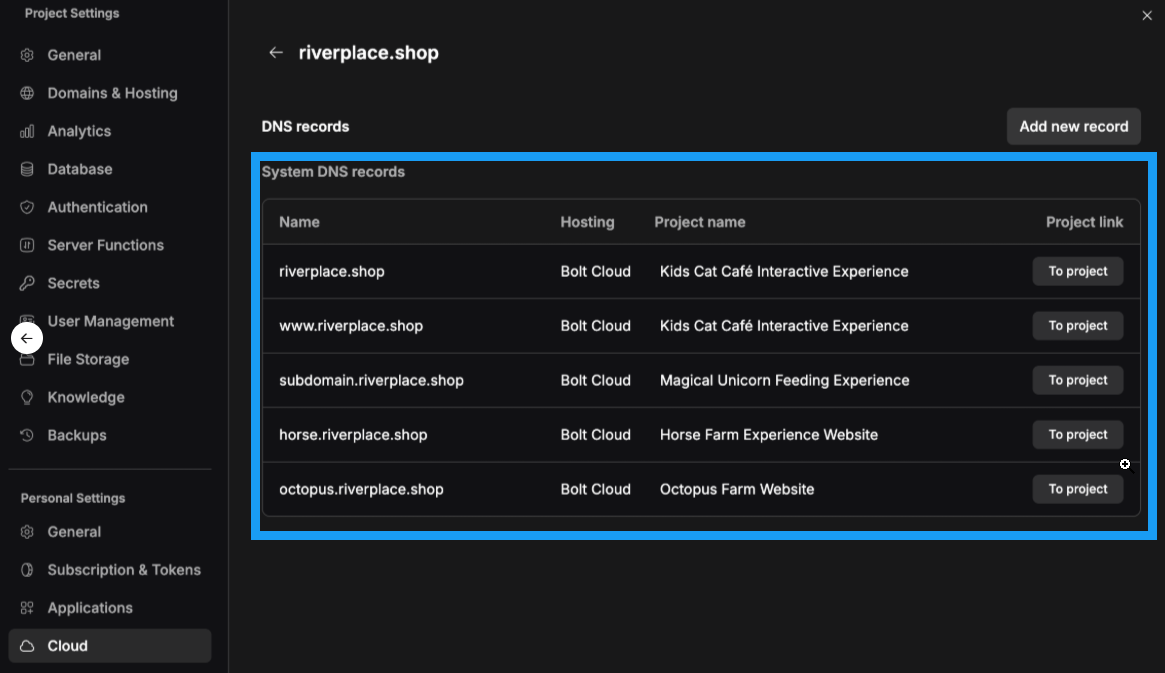
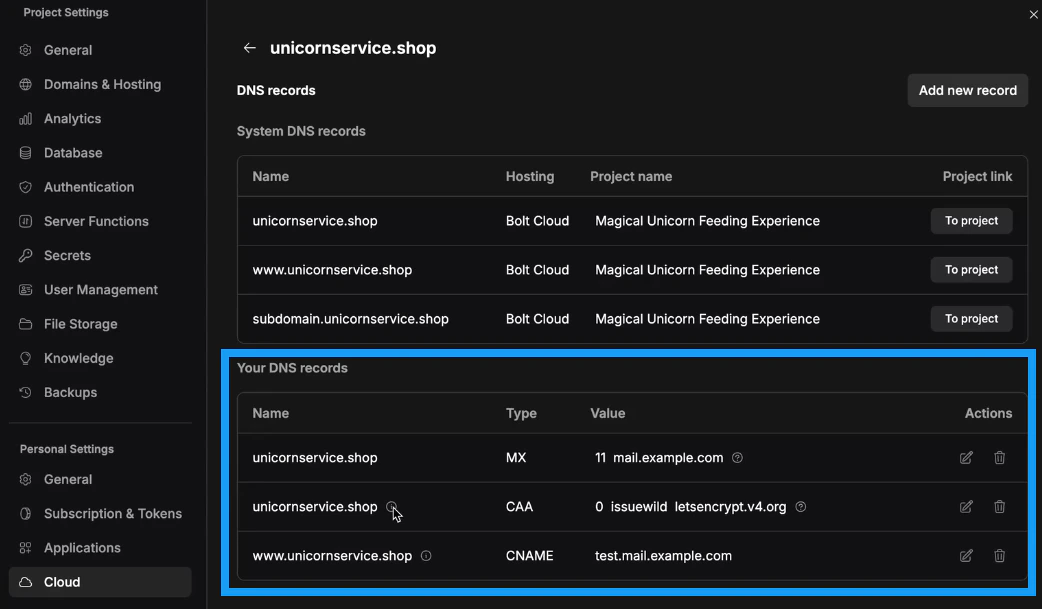
Add a DNS record
To add a DNS record to a domain purchased through Bolt, follow these steps:- Log in and open any Bolt project.
- Click your profile icon in the top right of your screen, then click Settings.
- Click Cloud in the left navigation menu.
- Scroll down to the Custom domains section and identify the domain you want to change.
- Click the three dots on the right side of the domain’s row, then click Open domain settings.
- Click Add new record.
- Select your record Type, then fill in its values. For most record types, you can also set a custom TTL.
- Click Save.
Limitations on creating records
You cannot create an A or AAAA record for a domain/subdomain if a system DNS record already exists for that domain/subdomain. You cannot view system record details, but you will see an error message that lets you know if you’ve attempted to add a record that already exists. See the example screenshot below: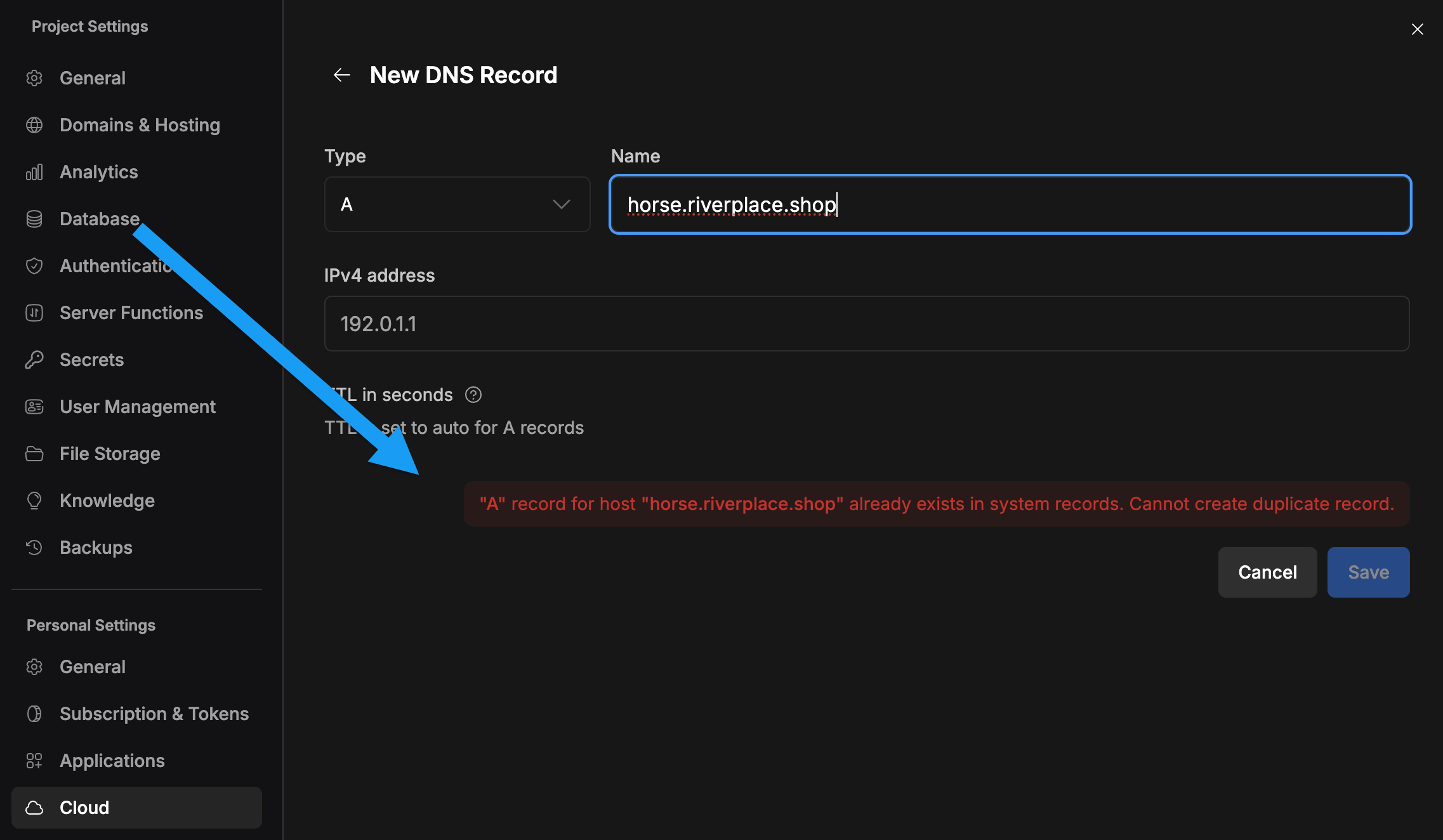
Set a TTL for a record
TTL (time to live) is how long (in seconds) browsers and other internet services remember a DNS record before they check it again. A shorter TTL means that services check your record more often, so changes to your record reach visitors faster. A longer TTL means that services check your record less often. Whether you can set a TTL depends on the record type:- A and AAAA records have a fixed TTL of 3600 seconds (1 hour). On the New DNS Record page, you’ll see a message like
TTL is set to auto for A records. This means that the TTL is automatically set to 3600 seconds and can’t be changed. - All other record types (CAA, CNAME, MX, NS, SRV, and TXT) let you set the TTL value you want to use.
- If the record type allows it, enter a value in the TTL in seconds (optional) field when you add or edit a record.
- On the Cloud page, on the Custom domains tab, find the record you want to view.
- Click the three dots on the right side of the domain’s row, then click Open domain settings.
- In the Actions column, click the pencil icon to open the DNS record and see its current TTL.
Edit a DNS record
To make changes to an existing record, follow the steps below:- Log in and open any Bolt project.
- Click your profile icon in the top right of your screen, then click Settings.
- Click Cloud in the left navigation menu.
- Scroll down to the Custom domains section and identify the domain you want to change.
- Click the three dots on the right side of the domain’s row, then click Open domain settings.
- Click the pencil icon in the Actions column for the record you want to edit.
- Make your changes, including the TTL if the record type supports it, then click Update.
Delete a DNS record
To delete a DNS record that you previously created, follow the steps below:- Log in and open any Bolt project.
- Click your profile icon in the top right of your screen, then click Settings.
- Click Cloud in the left navigation menu.
- Scroll down to the Custom domains section and identify the domain you want to change.
- Click the three dots on the right side of the domain’s row, then click Open domain settings.
- Click the trash icon in the Actions column for the record you want to delete.
- Click Delete to confirm.