

- Handling payments, authentication, or other sensitive logic
- Receiving webhooks from third-party services like Stripe or GitHub
- Generating images or social preview cards on demand
- Calling external AI APIs like OpenAI
- Sending transactional emails
- Building messaging bots for Slack, Discord, or other platforms
View server functions
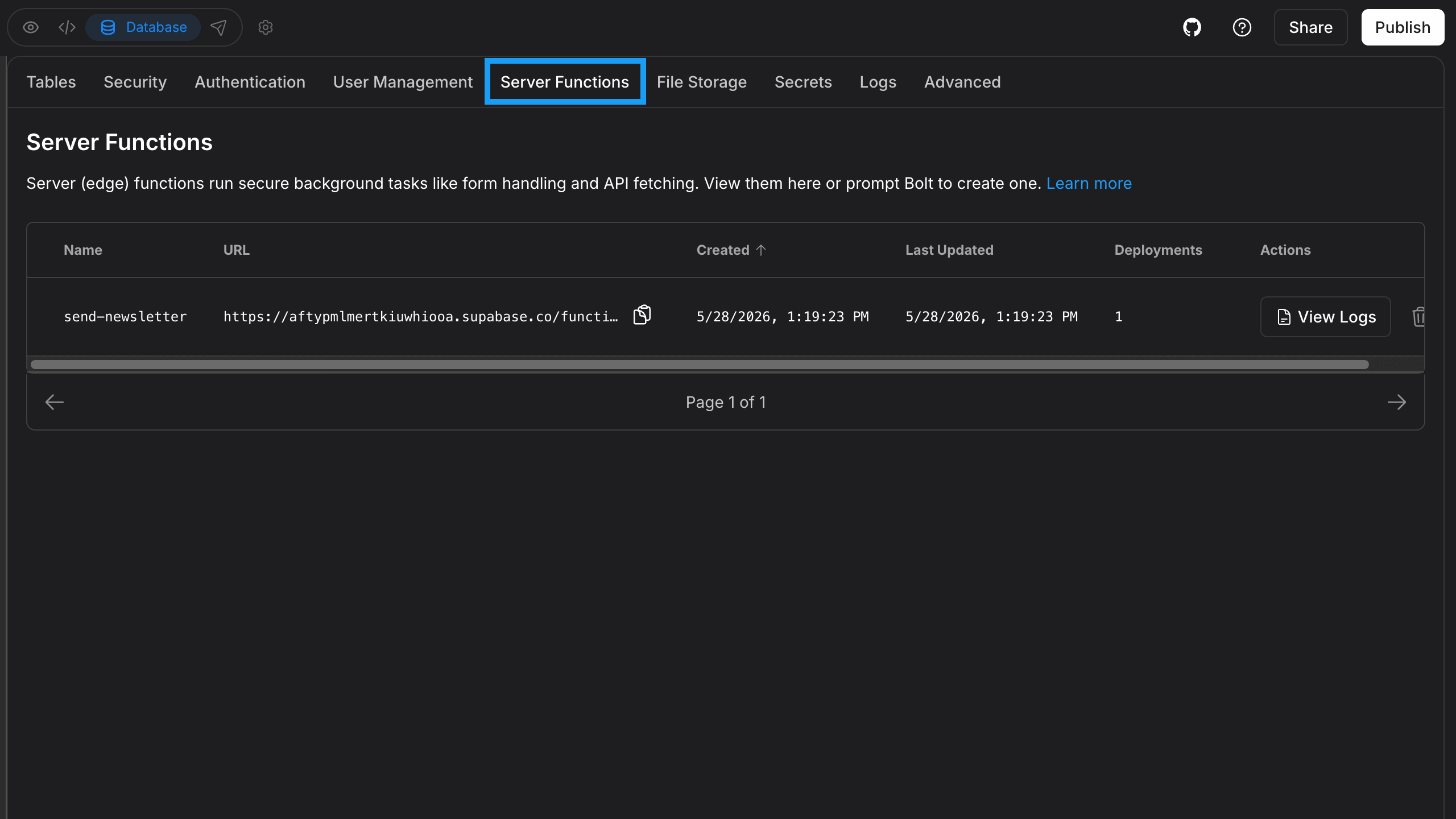
To open the server functions settings for your project’s database:- Open your Bolt project.
- In the top center of the screen, click the database icon.
- Click Server Functions.
View logs
To view logs for a server function, click View Logs: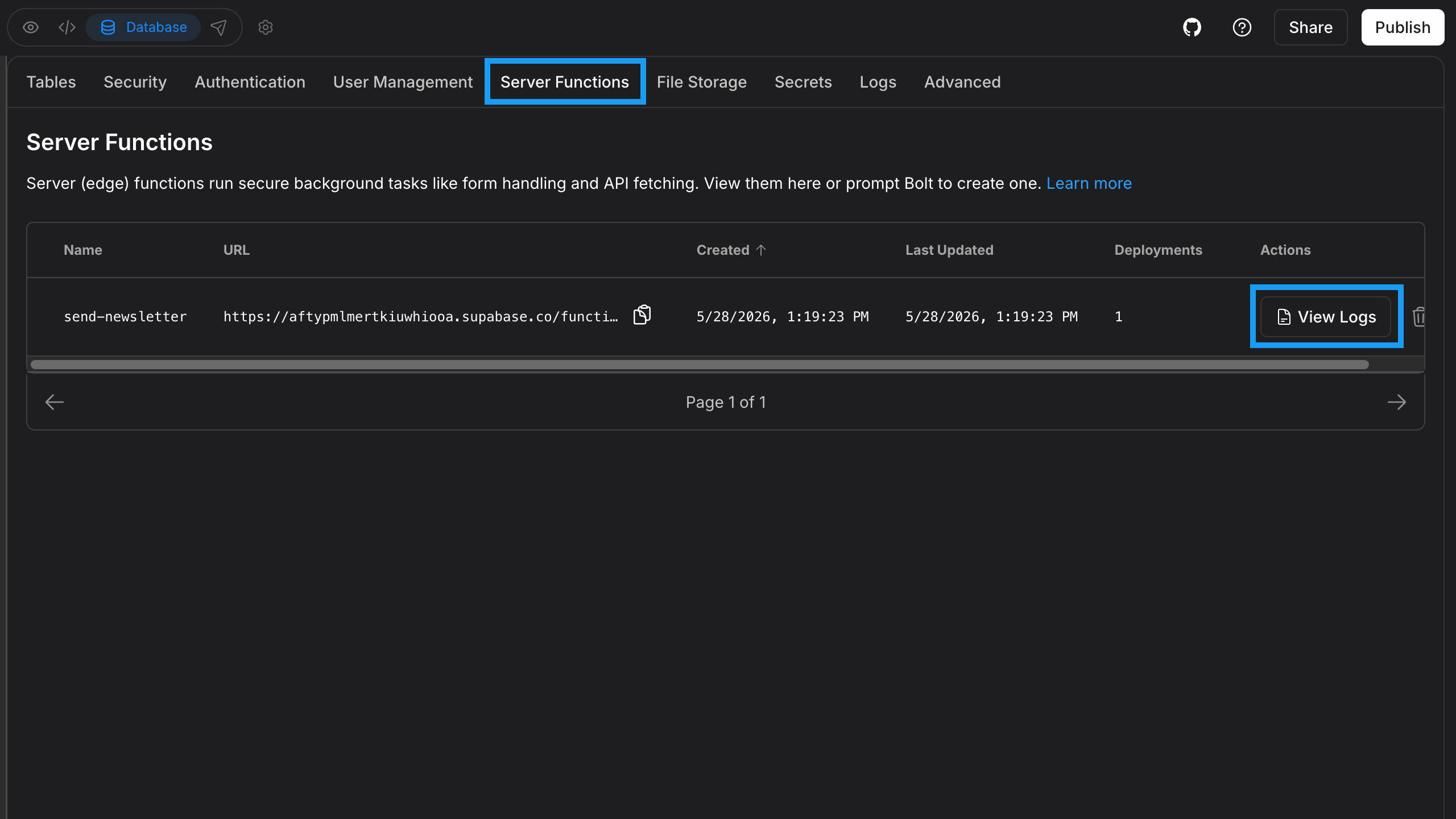

Update server functions
Bolt deploys your server functions for you, both when it creates them and when it updates them. You don’t need to do anything yourself to redeploy a function that’s changed.Delete server functions
To delete a server function:- Open your Bolt project.
- In the top center of the screen, click the database icon, then click Server Functions.
- Find the function you want to delete, then click the trash can icon.
- Click Delete to confirm.